



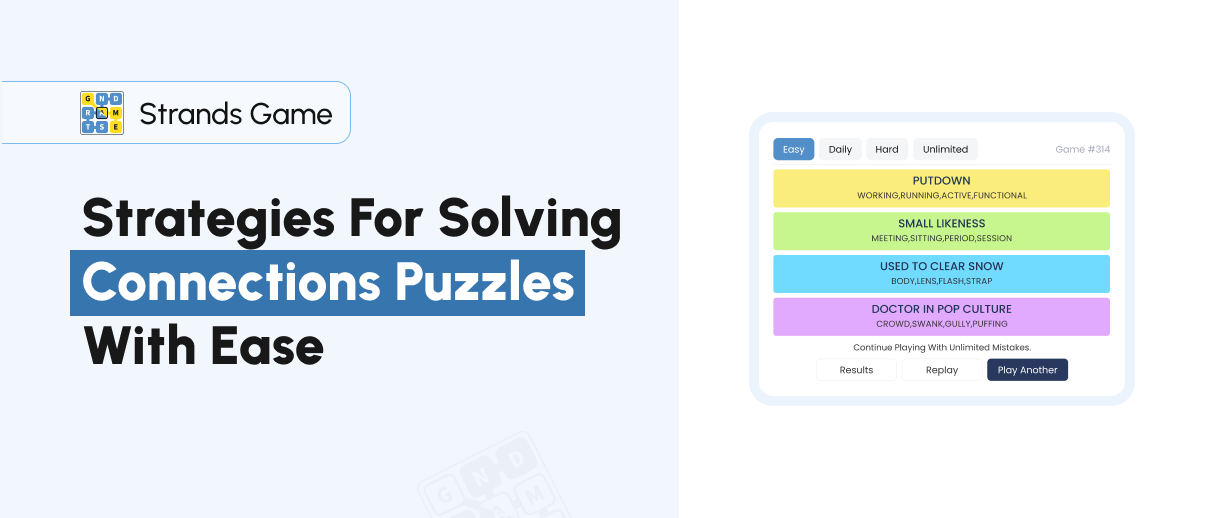
Do you know why Connections puzzles are so popular? These clever brain teasers ask you to put words or things into groups based on secret connections that are sometimes very clear and sometimes very subtle. Finding patterns that other people might miss is the key to finding things like synonyms, similar themes, or cultural references that everyone can relate to. Applications that train your brain, word games, and daily tasks on sites like The New York Times have made Connections puzzles very popular. In addition to being fun, they help you think more logically, remember things better, and get better at making quick links when you're under a lot of stress.
People like you have been stuck on a Connections puzzle and didn't know how to make sense of the words that were all over the place. You need more than luck to solve these puzzles. You need strategy, attention, and a methodical approach. This blog post will talk about useful tips that will help you solve Connections problems quickly and with confidence.
Understanding Puzzle Theme
To make it easier to solve the Connections puzzle, you should first know how they are put together. Usually, you are given a list of 16 words that you need to arrange into 4 groups of 4. Each group has a theme or idea that ties them together.
The themes can be as easy as colors, animals, or tools, or they can be more complicated, like movie titles, pop culture references, or synonyms. You can even see how hard a group is by its color, with yellow being the easiest and purple being the hardest, so you know what to expect.
Helpful Strategies for Solving Connections Puzzles
Start with Obvious Words
When you first look at a Connections puzzle, it's best to start with words that you know or that seem to go together, like the names of foods, animals, or musical instruments. These words are usually easier to find without having to think too much. It's better to believe your first instinct than to think too much about it.
For example, if four words make you think of something you've seen or learned before, that's a theme. By quickly putting together the easiest words, you boost your confidence and make room in your mind to work on the harder parts later.
Use the Process of Elimination
The next step is to use the process of elimination to narrow down the possible answers. This is done by trying out different word combinations and getting rid of the ones that don't fit together.
Keeping track of the groups that didn't work is helpful because it can help you figure out which words are linked and which ones aren't. If you find two or three words that go together, don't try to guess the fourth one. Instead, carefully look at the words that are left and choose the one that fits best to finish the group.
Think Laterally to Find Hidden Links
Once you're done with the easy groups, you should start to think in a new way, or "think outside the box." This means looking for connections that aren't obvious at first, like homonyms (words that sound the same but mean different things), clever puns, or even cultural references from music, movies, or history.
In your mind, it can be helpful to play a short game of word association by asking yourself what each word makes you think of. This can sometimes lead to links you didn't expect. Also, keep in mind that some words may fit into more than one group because they can mean two different things.
Note Important Information
One effective way to improve your skills at solving Connections puzzles is to keep a small notebook or even a note on your phone where you write down the various themes you've seen before such as Oscar-winning movies, sports teams, types of fabric, or anything else that comes up because puzzles frequently repeat similar ideas.
Over time, you'll develop a mental library of these recurrent themes, making it much easier to identify uncommon or hidden groupings in future problems. This habit not only helps you solve problems faster, but it also teaches your brain to perceive patterns more easily.
Don’t Overthink at the Beginning
When starting a Connections problem, avoid jumping right into deep or difficult connections because this might make things feel confusing too early and lead you away from the simpler answers that are there in front of you. Instead, start with the easy and apparent groupingslook for terms that clearly belong together without much guesswork or thought.
Once you've completed the easy groups, the more complex or difficult sections usually remain, and by then, your mind has warmed up and is more prepared to face the task.
Stay Focused
When solving a Connections puzzle, it is extremely beneficial to set a time limit for each group you are attempting to locate, as spending too much time on one component will cause your brain to become stuck and less sharp.
If nothing seems to make sense after a few minutes, take a little break even stepping away for a moment can help your mind reset and return with a fresh perspective. Most essential, strive to be calm and organized as you travel, as panicking or rushing under pressure often results in mistakes and missed connections.
Conclusion
Solving Connections puzzles gets a lot easier when you combine clear thinking with easy tactics like starting with obvious groupings, eliminating incorrect possibilities, thinking creatively, and noting repeating themes. By avoiding overthinking early on and taking small breaks as needed, you educate your brain to recognize patterns more readily and solve puzzles with greater confidence. With consistent practice and a logical approach, you will not only improve your game but also your entire problem-solving abilities in daily life.