


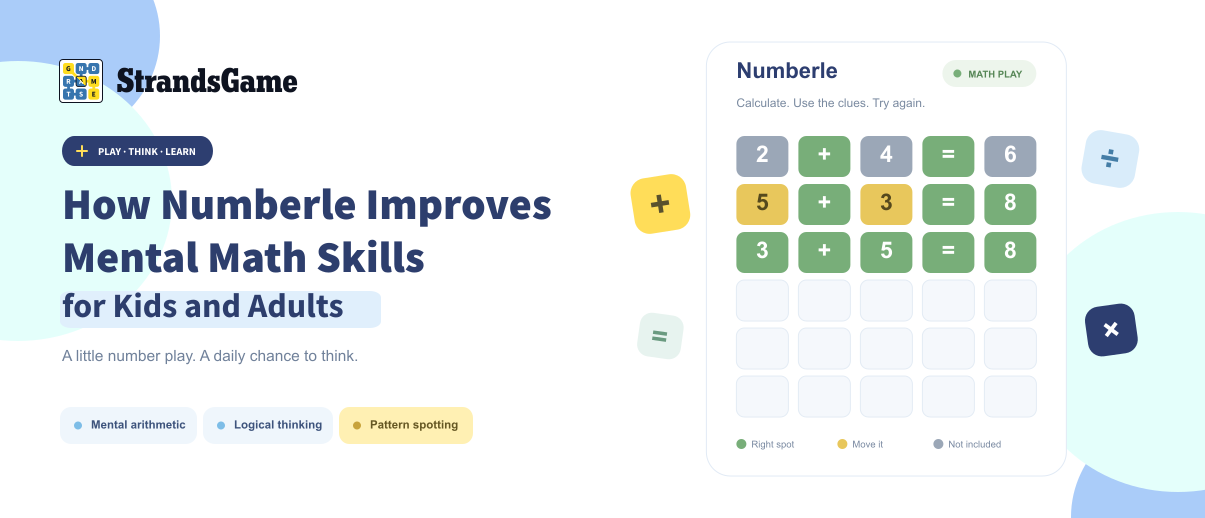
For most of the people, math practice is just about rows of worksheets, head scratching, a ticking clock and a pen. It works for some people. On the other hand, for some of the kids and adults it’s just something frustrating and they really don’t like solving these equations.
Numberle flips that experience. Instead of solving problems someone hands you. You work to solve a hidden equation. You solve it using clues from each guess. This is an enjoyable experience for various individuals. Every round quietly exercises the same skills that make someone quick and confident with numbers.
Now let's first understand what Numberle is and then we will move forward to understand which mental math skills it builds.
What is Numberle?
Numberle is a math puzzle game inspired by the word guessing game Wordle. You don’t guess a hidden word. Instead you guess a hidden equation. You build your guesses with the digits 0 to 9. Meanwhile you also guess the operators +, -, *, / and =. Every guess must be a mathematically correct equation.
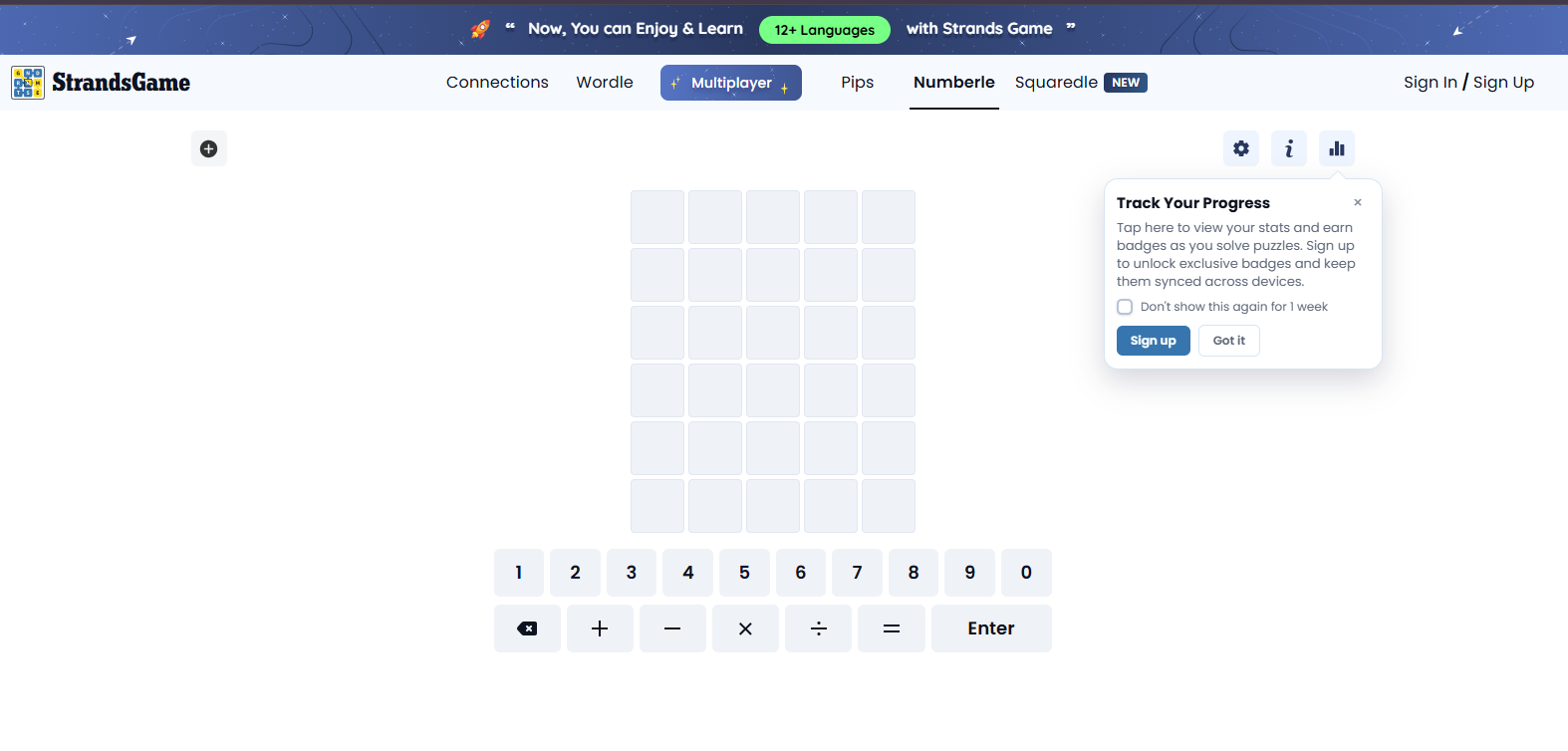
You have six attempts to guess the exact equation. After each guess, the tiles change color to guide you:
A green tile represents that the digit or sign is correct and in the correct position.
A yellow tile represents that the digit or sign is correct but not in the correct position.
Gray means the digit or sign is not in the equation at all.
On our website, the default puzzle is 5 tiles long. However there are options to select more titles of upto 12.
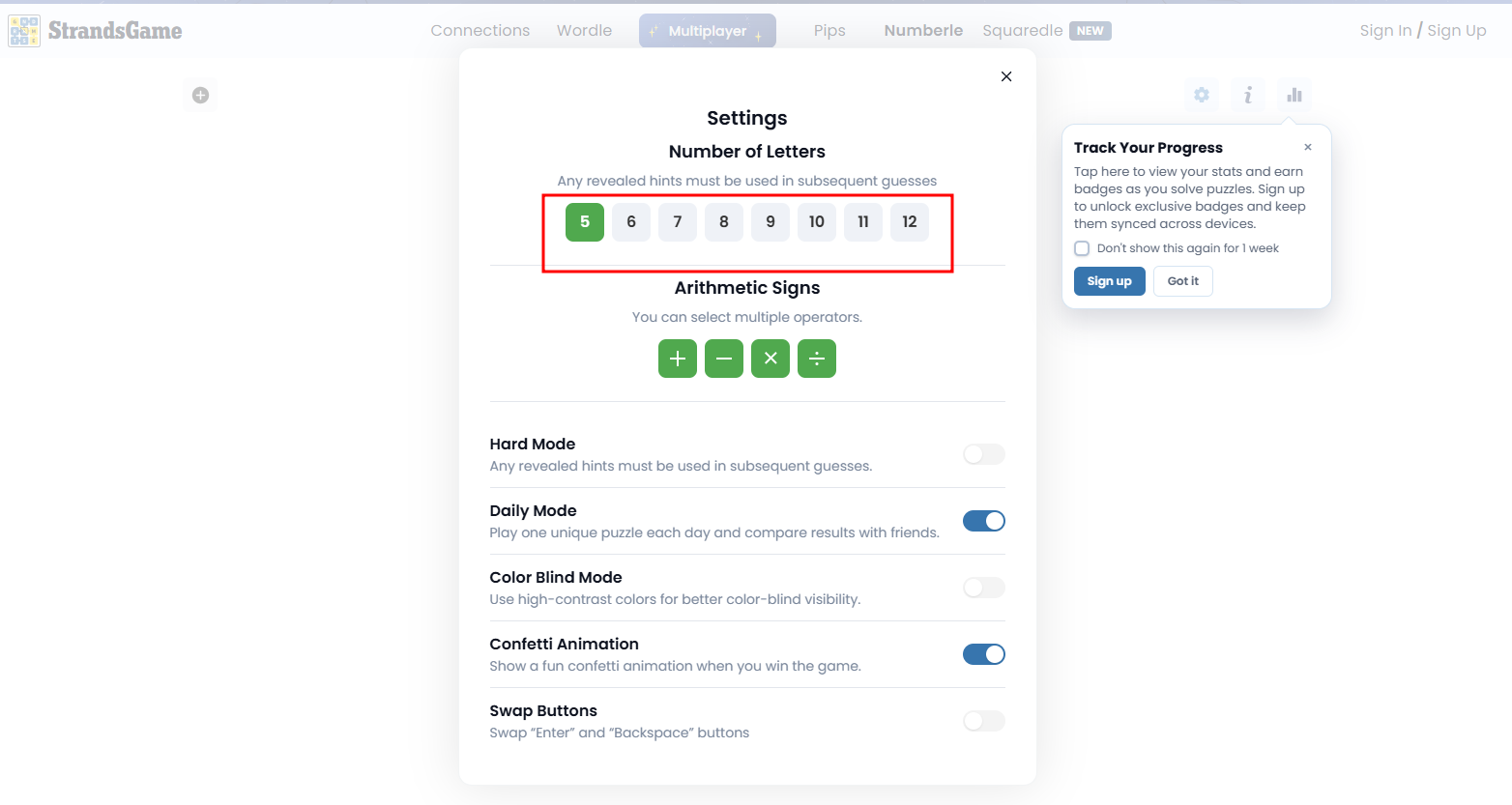
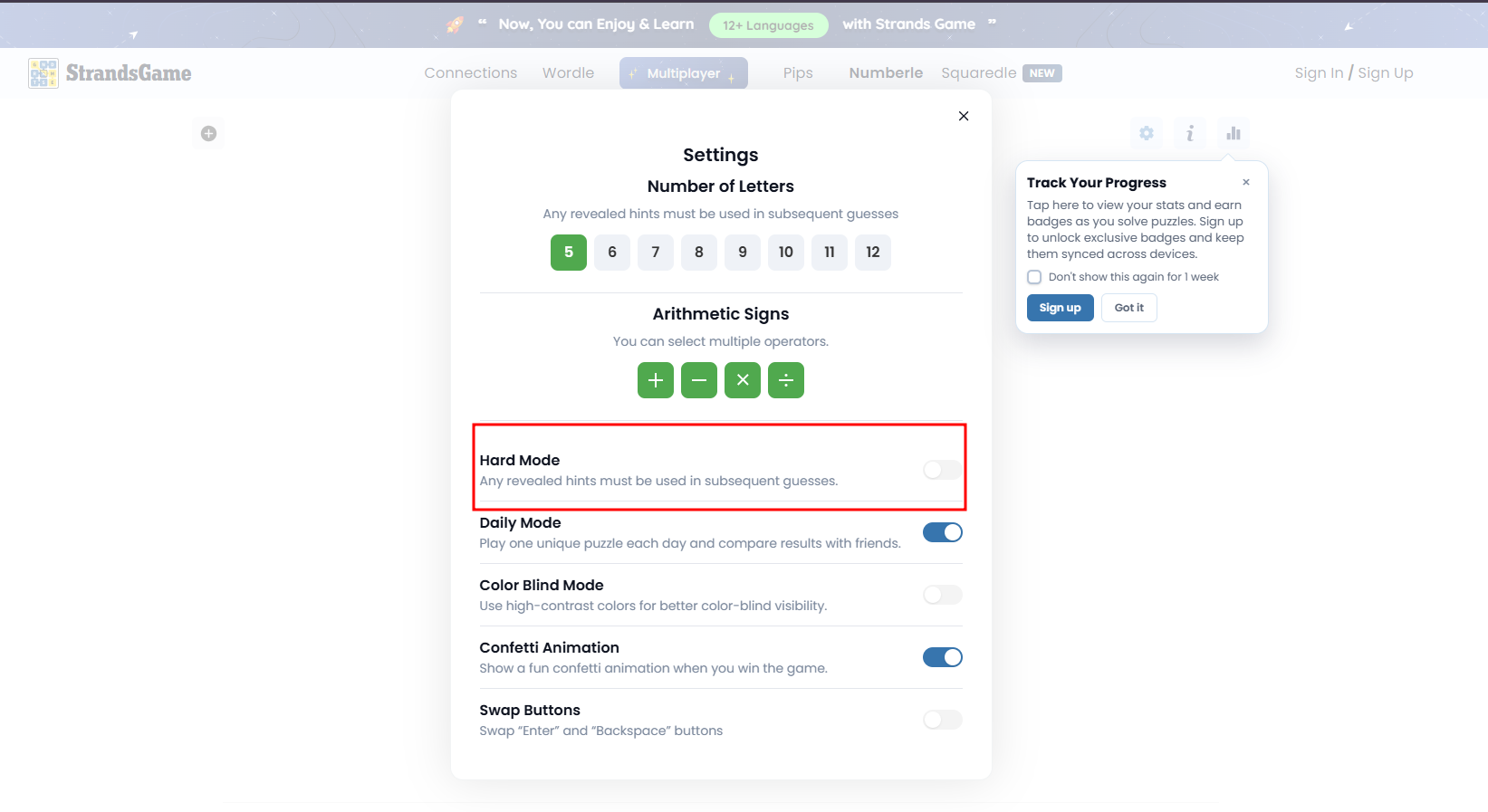
You can change the number of tiles as well. Go to the settings and click on a higher number. There is also a hard mode for players who want stricter rules.
Why Numberle Works Differently from Regular Math Practice
The usual math problem gives you the question and lets you solve it on your own. For instance, you may be asked to answer 7 + 2 = ?. Numberle gives you almost nothing. It asks you to find both the left and right sides of the equation. You have to think about which numbers would fit.
You also need to find which operators will fit and if this equation is balanced. Such analysis and thinking is very important. In practical life, people don’t do math on worksheets. For example, splitting a bill, comparing prices or making an estimation of travel time.
You try possibilities and check if the result makes sense. Numberle trains this style of thinking. You don’t memorize facts but do it in your mind.
Moreover, it also removes pressure. There is no timer in Numberle. If you guess something wrong, it will become gray or yellow. Hence it gives you information and you can try again. Such settings lead you to practice regularly and you improve gradually.
What Mental Math Skills Does Numberle Develop?
Although there are various mental math skills that Numberle develops but we are going to mention only a few of those. These are as follows:
Arithmetic Fluency
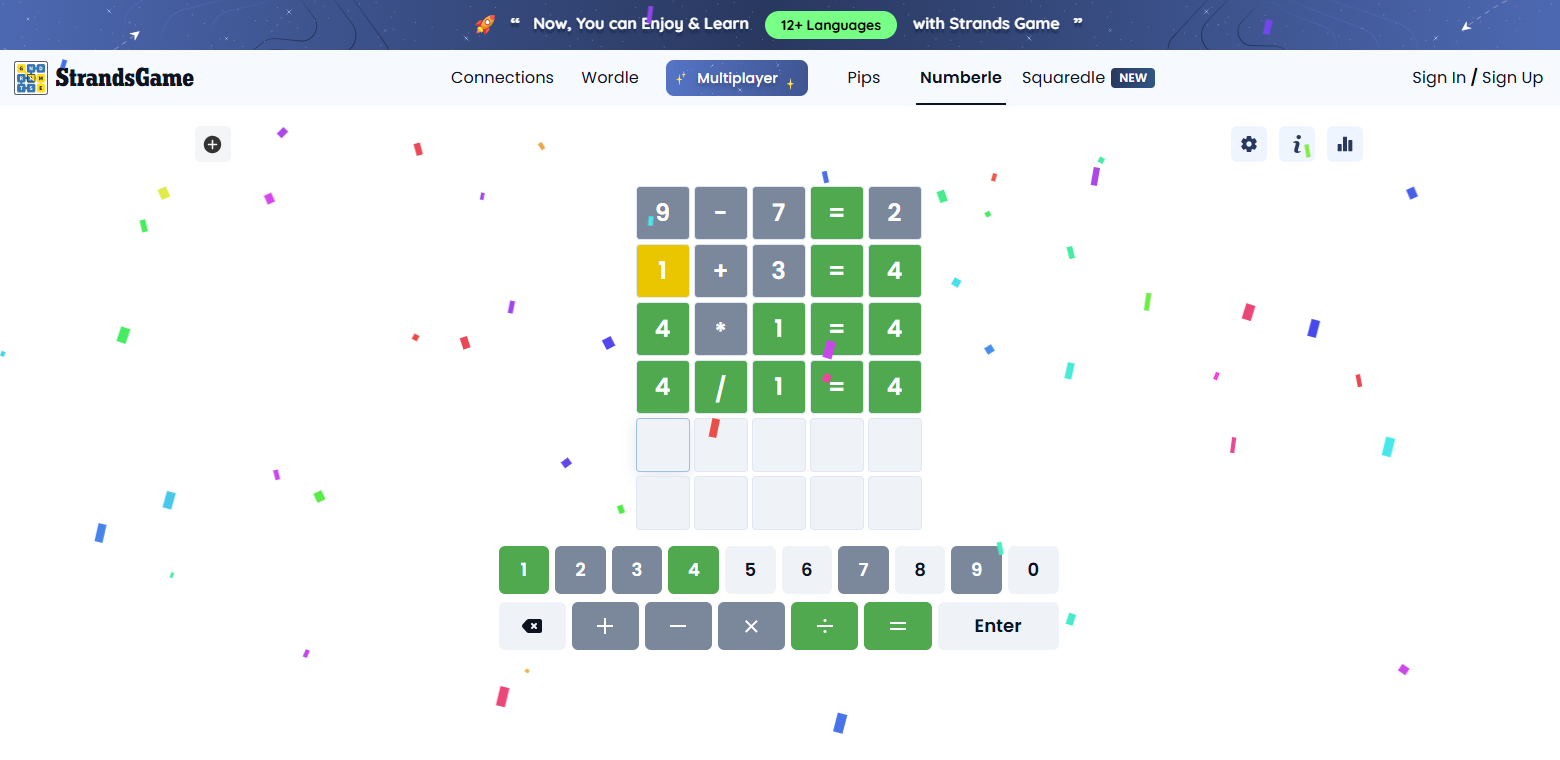
You need to make sure that your equation is accurate. So you do the calculation in your head. Suppose you enter 9 - 2 = 7. Now you will calculate whether it’s really correct and then you will press enter.
After you play multiple rounds, you will be able to solve basic addition, subtraction, multiplication and division faster.
Number Sense
Number sense is your natural understanding of numbers. You can tell how numbers relate to each other without always needing to calculate exactly. In Numberle, you quickly learn things like: a single digit plus a single digit can't go above 9.
Multiplying usually produces bigger results than adding and dividing by larger numbers leaves smaller answers. This intuition helps you rule out impossible equations before you even try them.
Understanding Equations
Many students treat the equals sign as "the answer comes next." Numberle reinforces that both sides of an equation must be equal. When you know the result must end in a certain digit. You have to think about what combinations on the left side could create it.
Order of Operations
On longer puzzles, equations can include more than one operator. For instance 9 / 9 = 1. To make a valid guess, you need to apply multiplication and division before addition and subtraction. Players may find this rule a bit difficult in the beginning.
Logical Deduction
The color clues turn each round into a logic puzzle. If a digit turns gray, you eliminate it.
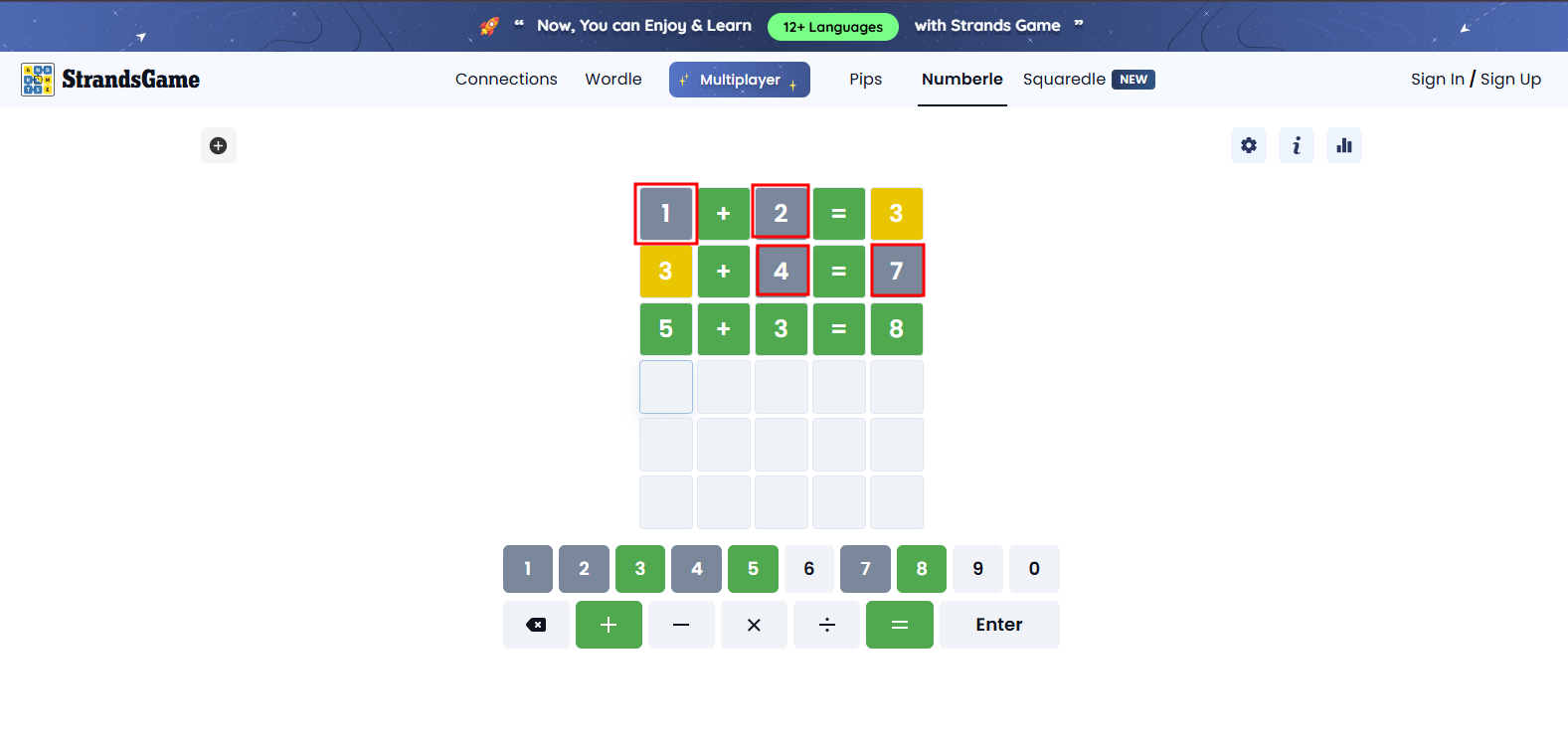
If a digit turns yellow, it belongs somewhere else.
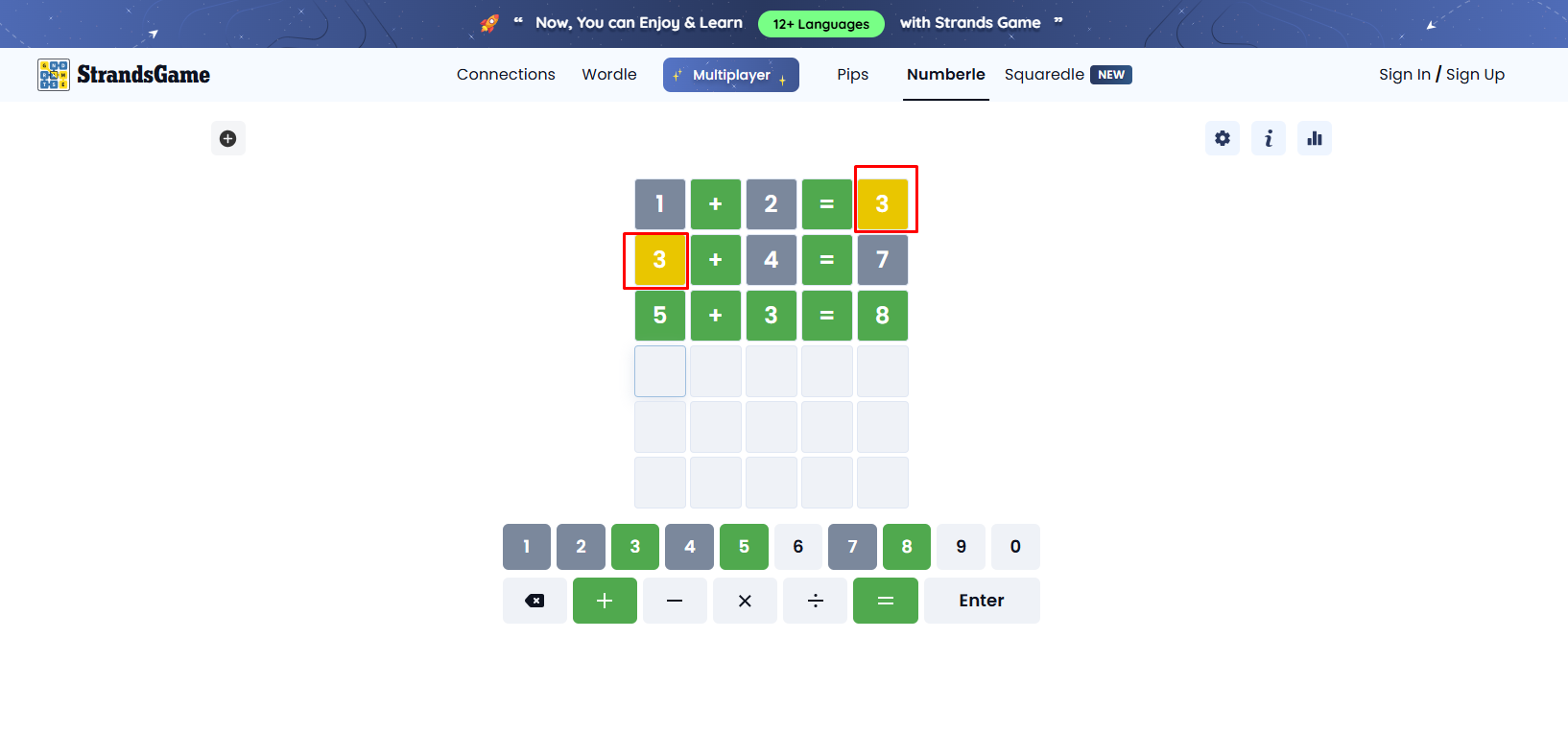
You need to combine these clues and narrow down the possibilities. This is the step-by-step reasoning used in problem solving across math and science.
Working Memory
While planning your next guess, you have to hold several facts in your head at once. You need to keep in mind which digits are ruled out, which positions are locked and which equations still work. Practicing this regularly exercises working memory, the mental "notepad" that mental math depends on.
Strategic Thinking
Good Numberle players don’t guess randomly. They choose opening equations that test many different digits. They avoid wasting tiles. For example, an equation containing 01 is technically valid. But it spends a tile on a zero that tells you very little. Learning to make efficient, information rich guesses is a skill that transfers to planning and decision making in general.
How Numberle Helps Kids?
Let's understand how Numberle helps kids to improve mental math skills.
Math Practice Feels Like Play
Children enjoy practicing when they see that they are going to play. The colorful tiles and the exciting moment of cracking the equation give kids a reason to come back. This builds the regular practice that math fluency requires.
Reduce Fear of Mistakes
In a classroom, a wrong answer can feel embarrassing. However, in Numberle a wrong guess is useful. This is because a wrong guess can reveal clues. This helps kids see mistakes as part of learning. This type of attitude is what supports a healthier relationship with math.
Strengthens What They Already Learnt
Addition, subtraction, division, multiplication and order of operations are all core topics in primary and middle school math. Numberle gives kids a fun way to use those skills outside of homework.
Confidence Building
When kids solve a puzzle on their own, they feel a real sense of achievement. Starting with the 5 tile version and moving to longer equations as they improve lets them feel their progress.
How Numberle Helps Adults?
Numberle is not just useful for kids but for adults as well. Let's understand now how Numberle helps adults improve mental math skills.
Sharp in Maths
Some of the adults do maths on calculators and phones, even for simple addition. It is really awful in some situations. A daily Numberle puzzle is an easy way to stay good at it. This helps with budgeting, shopping, tipping and estimating in daily life.
Healthy Mental Workout
Numberle puzzle gives your brain a focused challenge. A short puzzle during a break is a more engaging alternative rather than scrolling. This can help you refocus before returning to work.
Rebuild Math Confidence
Most of the adults have anxiety about maths from school. Numberle has no timer and no penalties. It offers a gentle, anonymous way to rebuild comfort with numbers.
Great Daily Habit
A single puzzle takes only a few minutes. This makes it easy to fit into a morning routine or coffee break. When an adult keeps playing consistently it keeps mental skills sharp. A daily engaging habit makes it easy to maintain while a study plan feels boring.
Conclusion
Numberle looks like a simple guessing game. But every round works on arithmetic, number sense, logical deduction, working memory and strategic thinking. For kids, it turns math practice into play. The mistake doesn’t feel like a mistake, but like progress. For adults, it keeps your math sharp and offers a quick brain workout.
The important part is that you don't need a textbook or a study plan. You just need a few minutes to play and complete the game.
FAQs
What age is Numberle suitable for?
Numberle is best for children who are comfortable with basic addition and subtraction. So children around age 7 or 8 can play it. Younger kids need parents' help to play it. Also, there is no maximum age limit. Adults of any age can play. They can also adjust the difficulty to match their skill level.
Can parents and kids play Numberle together?
Yes, parents and kids can play Numberle together. Parents and children can talk to each other, discuss why a tile turned yellow and decide on the next equation together. This kind of problem solving helps kids hear how an adult analyzes numbers. It makes math a family activity. Thus, it no longer remains typical homework.
Does the order of numbers matter if the equation means the same thing?
Yes, sometimes. An equation like 2 + 3 = 5 and 3 + 2 = 5 are mathematically equal. But the game checks each tile's position. If the hidden equation is 3 + 2 = 5 and you guess 2 + 3 = 5. You will see yellow tiles and not the green ones. This teaches players to pay attention to exact positions.
What should I do if I get stuck on a puzzle?
If you are stuck on a puzzle, you need to carefully look at the clues you have. Type the digits and operators that are yellow and green. Then think about where the equals sign could fit. Its position limits how long the answer can be. When you focus on the result side first, it becomes easy to determine the left side equation.
In how much time will my maths skills improve?
It depends on the number of times you play. When you play regularly. You will notice that you calculate faster and make fewer invalid guesses. Consistency is important here. It's better to play for a few minutes per day. Playing for long hours per week will not provide as much improvement as playing per day does.
Can Numberle replace regular math lessons?
No. You should play Numberle as additional practice. It strengthens arithmetic and reasoning. But it doesn’t teach new concepts like geometry, algebra or fractions. You can play it just to practice, which keeps skills fresh while you are usually learning.
Is Numberle helpful for people who find math difficult?
It can be. There is no timer and each wrong guess gives useful feedback. Players can play at their own pace. They can start with the shortest equation length. They can then move up slowly when they are comfortable with the game. If someone has a specific learning difficulty. They can benefit from additional support from a teacher or specialist.
Is a good first guess important?
A strong opening guess makes a big difference. You need to use multiple different digits. You also need at least one operator in your first equation. This reveals more information early. It leaves you with more attempts to narrow down the answer.